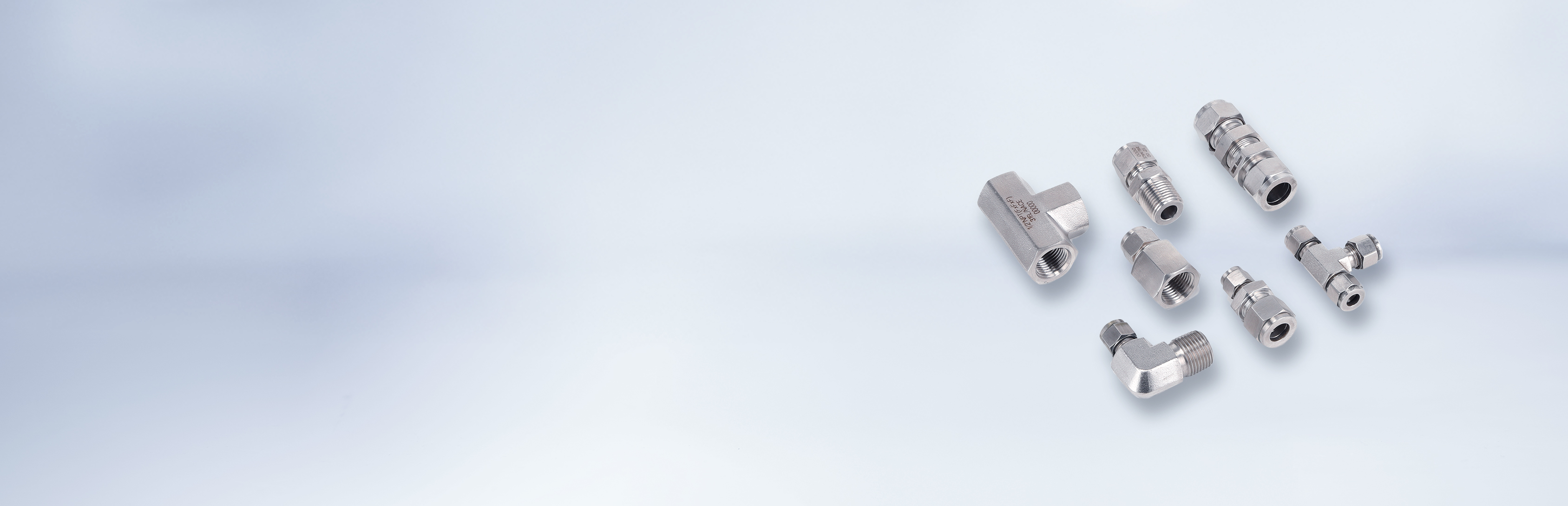
Product portfolio
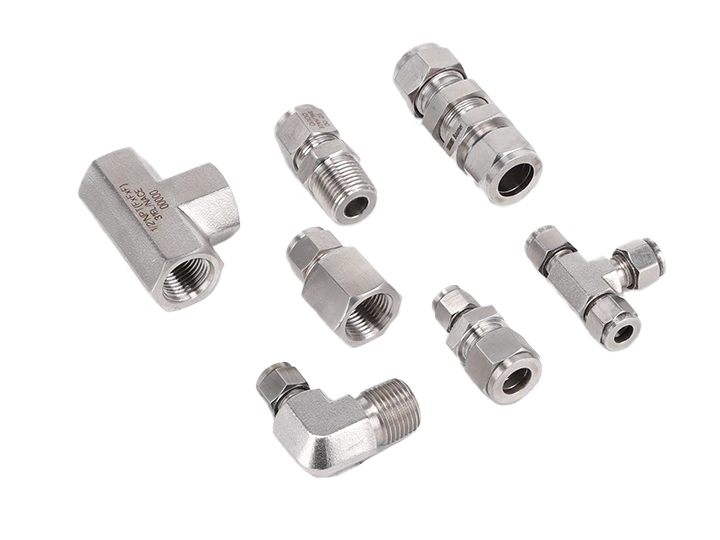
Description
Double compression tube fittings are essential components used in piping systems for joining tubes to a fitting securely, preventing leaks and ensuring a reliable seal. The primary function of a double compression tube fitting is to create a leak-proof connection by tightly sealing the tube inside the fitting. The "double" compression means that there are two stages of compression to ensure a secure, reliable and strong joint. They provide better sealing as they apply compression at 2 points (inner and outer ferrules) reducing the chance of leaks compared to single compression fittings. These fittings are designed to handle more demanding applications providing a longer service life and better resistance to high-pressure and temperature conditions.
Double compression tube fittings are typically made from high-strength materials like stainless steel. These materials provide resistance to corrosion, extreme temperatures and high-pressure conditions.
Your benefits
The double compression mechanism provides an exceptional seal even under high-pressure and vibration conditions preventing leaks and ensuring system safety.
These fittings are simple to install and remove requiring only basic hand tools. There is no need for welding, brazing or soldering, reducing installation time and complexity.
The dual compression ensures that the fitting provides a strong and reliable connections capable of withstanding extreme pressures, temperature variations and mechanical stresses.
Technology
The core of double compression tube fittings lies in their dual-seal mechanism which enhances leak prevention and provides a reliable connection even under high pressure and vibration.
Inner compression: As the fitting nut is tightened, the inner ferrule compresses onto the tube. This first compression creates a tight seal between the tube and the fitting body preventing fluid or gas leakage at this critical connection point.
Outer compression: Simultaneously, the outer ferrule is compressed against the nut which secures the nut in place and enhances the stability of the tube. This second compression ensures that the fitting is locked in place preventing any slippage or loosening over time.
This dual-stage compression mechanism results in a stronger, more reliable connection than single compression fittings as it ensures tight sealing at both ends of the tube.